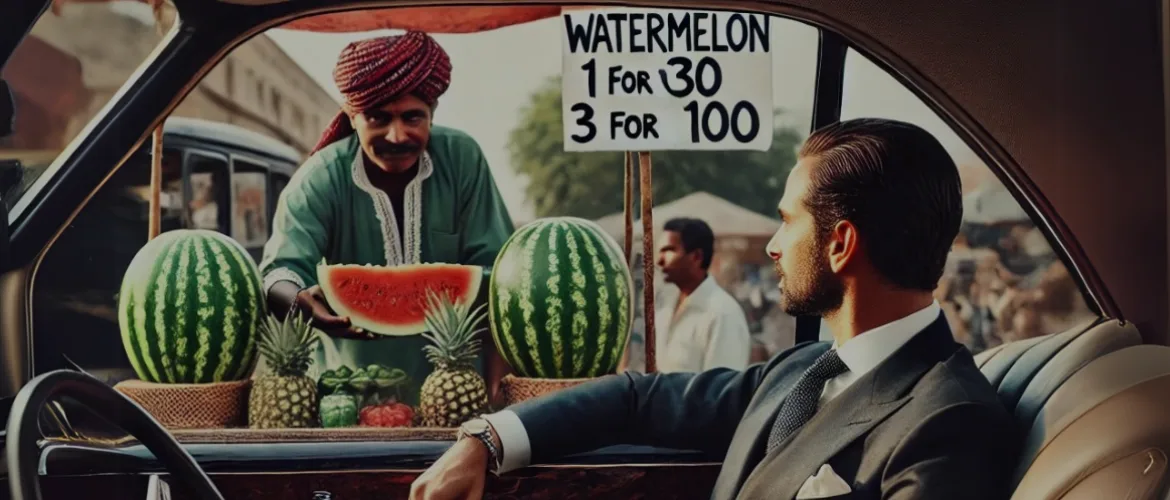
Dina Bhai wiped sweat from his forehead and waved a cloth over his cart, shooing away flies. The fresh watermelons gleamed in the afternoon sun.
He adjusted the price board:
1 for ₹30
3 for ₹100
A sleek black sedan pulled up. The window slid down, revealing a young man in a crisp white shirt and expensive watch. He glanced at the board and let out a chuckle. Stepping out, he called, “Hey old man! Give me one watermelon.”
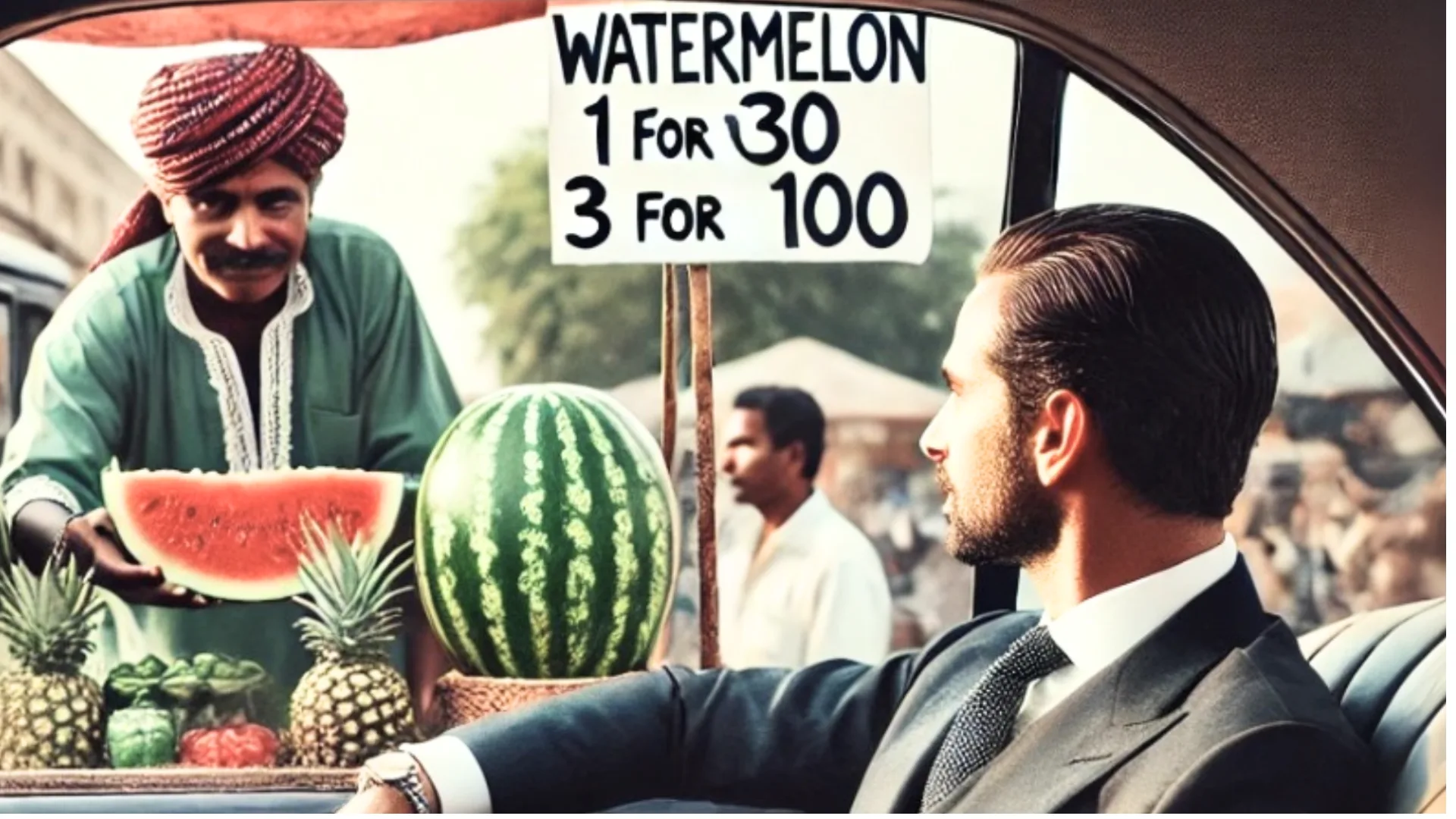
Dina Bhai smiled, handed him a watermelon, and instead of stretching out his hand, he pointed to a QR code taped to the cart.
The man smirked, pulled out his phone, and scanned the code, making a quick UPI payment of ₹30. As he grabbed the melon, his eyes flicked back to the board.
After a brief pause, he ordered another. Then another. He paid paid ₹60.
Satisfied, he straightened his tie, rolled his shoulders back, and grinned. “Old man, do you realize I just got three watermelons for ₹90 instead of ₹100? You lost ₹10 in one sale. Maybe business isn’t your thing.”
For a moment, Dina Bhai’s face showed a flicker of concern. The young man, pleased with himself, stepped into his car, nodded smugly, and drove away.
Dina Bhai watched him leave, then chuckled. “People are funny. They always think they’ve outsmarted me—but they always buy three instead of one.”
Dina’s Bhai Pricing Strategy
He set the price of one watermelon at ₹30, anchoring the customer’s mind to that number. Now, every price they saw after that felt like a comparison.
When they looked at the three for ₹100 offer, their brain kicked into Reference Price Mode—comparing it to buying three separately for ₹90. And that’s when Loss Aversion played its part. Nobody likes feeling like they’re losing money, even if it’s just ₹10.
So, convinced they were outsmarting the seller, they proudly took the bulk deal, thinking they had won.
Little did they know, Dina Bhai had set them up all along. Every customer who walked away feeling like a winner had actually spent more than they planned—just as he wanted.

What can we learn from this seemingly simple transaction?
1️⃣ It’s Not About Price, It’s About Perception – Dina Bhai didn’t change his prices—he just framed them cleverly. People don’t always chase the lowest price, they chase the best deal.
2️⃣ Customers Love Feeling Smart – Steve left feeling like a winner. But who really won? People love to believe they’re getting the upper hand, and a smart seller lets them think exactly that—while selling more.
3️⃣ The Best Businessmen Don’t Sell, They Influence – Dina Bhai never pushed for a sale. His price board did the work for him. A well-placed pricing strategy can nudge customers to buy more without them even realizing it.
4️⃣ Both Sides Win – Steve was happy, Dina Bhai was happy. That’s how great pricing works. The best pricing strategies don’t just maximize profits, they make customers feel like they won.
5️⃣ Not All Business Lessons Come from Books – No MBA taught Dina Bhai this trick. He learned from experience, observation, and street smarts. In business, sometimes real-world tactics beat textbook strategies.
Final Thought:
The smartest businesspeople aren’t always the ones with degrees and big offices. Sometimes, they’re the ones pushing carts, setting up stalls, and quietly selling more than they ever let on. What do you think aobut his street-smart attitude?